
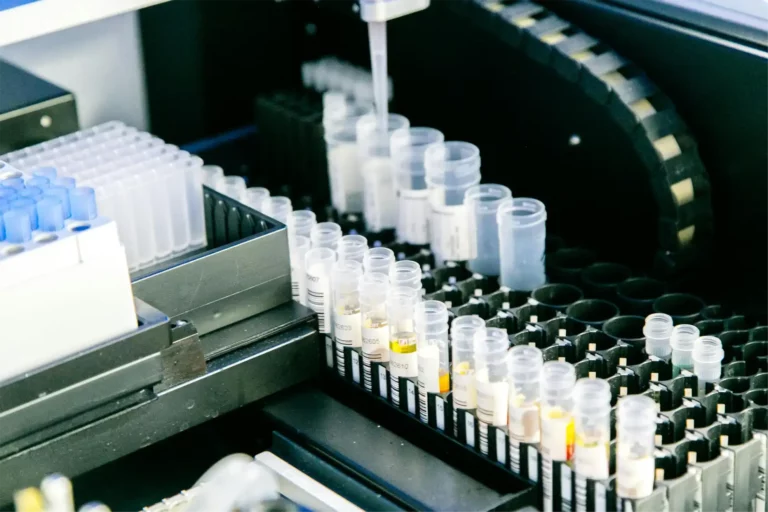
The landscape of drug discovery and development has undergone a tectonic shift over the last decade. As the molecular complexity of new chemical entities (NCEs) and biologics increases, the traditional model of maintaining comprehensive, in-house analytical laboratories is becoming increasingly unsustainable for many companies. Instead, the biotech industry has moved toward a decentralized ecosystem where outsourcing is a standard strategic maneuver to manage risk and capital. By leveraging a specialized analytical contract research organization (CRO), developers can access high-tier instrumentation and regulatory expertise without the massive overhead of internal infrastructure. This shift is not only about cost-cutting, but to a fundamental reimagining of the CRO business model to prioritize agility and scientific depth in an era of stringent regulatory oversight.
Why analytical CROs are crucial for modern drug development
The expansion of the contract research organization market is fundamentally driven by the escalating need for specialized technical knowledge during the transition from drug discovery to clinical phases. While the basic definition of a clinical research organization covers general outsourced research, the strategic value of a specialized analytical CRO lies in its capacity to navigate the rigorous characterization requirements, such as peptide mapping and high-sensitivity impurity profiling, demanded by global regulators.
These organizations provide cutting-edge techniques like chromatography, mass spectrometry, and sequencing that are essential for the detailed quality control of complex therapeutics, including mRNA-based drugs. By ensuring product purity and identity through these advanced tools, a global contract research organization facilitates faster decision-making and risk mitigation. In addition, outsourcing ensures that the resulting data is sufficiently robust to meet the exacting standards of primary regulatory bodies, such as the US Food and Drug Administration (FDA) or the European Medicines Agency (EMA).
The growth of the contract research organization market is driven by strategic partnerships that provide the scientific framework and robust analytical methods necessary to ensure regulatory compliance and a resilient drug development lifecycle.
Benefits of outsourcing analytical services in pharma & biotech
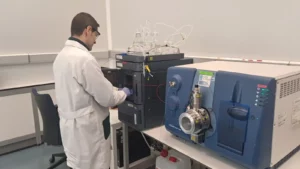
For many organizations, pharma outsourcing provides a pathway to institutional-grade technology that would otherwise be cost-prohibitive. When considering the CRO services, it often translates to an extended workbench capability. This allows internal teams to focus on core discovery while the contract research organization’s analytical services handle the technical heavy lifting of method development and validation.
Key benefits of this model include:
- Access to advanced instrumentation: Utilizing advanced techniques, such as high-resolution mass spectrometry (HRMS) and Ultra Performance Liquid Chromatography (UPLC) systems, allows for the detection of low-level impurities that standard techniques might miss.
- Operational flexibility: Outsourcing allows biotechs to scale their analytical operations up or down based on the current pipeline stage without permanent hiring.
- Risk mitigation: By establishing a strategic partnership with a CRO, biotech companies can distribute the technical risks associated with complex molecule stability and formulation.
- Resource allocation: Chief Financial Officers (CFOs) often view outsourcing strategies as a way to convert fixed costs into variable costs, improving the overall burn rate of the startup.
Furthermore, trends in CRO outsourcing indicate a move away from transactional, “fee-for-service” models toward deeply integrated collaborations. This evolution ensures that the CRO acts as a true extension of the internal quality control department of the biotech company.
Regulatory and technical challenges through strategic partnerships
The transition from the preclinical phase to clinical validation with a contract research organization involves significant regulatory risk. Every method must be validated according to ICH Q2(R1) guidelines. Nearly 50 % of R&D budgets are now directed toward external providers to manage these complexities. However, strategic CRO partnership models face hurdles, particularly in navigating unclear safety data requirements for novel modified drugs. Ambiguity in roles and a lack of standardized regulatory agreements can complicate joint strategies, potentially slowing progress.
Technical challenges often involve aligning processes across organizations, such as technology transfer and manufacturing scale-up, requiring regulatory flexibility. Additionally, decentralized clinical trial models introduce operational complexities that demand consistent protocols. Overcoming these involves early regulatory engagement. Artificial intelligence (AI) integration to improve drug characterization may also help with this procedure. To maintain confidentiality, modern partners utilize privacy-preserving computational methods, such as federated learning, enabling secure data sharing across the partnership. This is vital when a Contract Development Manufacturing Organization (CDMO) biotech partner or a Contract Manufacturing Organization (CMO) pharma entity is involved, ensuring analytical release remains audit-ready and secure.
Choosing the right analytical CRO: What pharma teams should look for
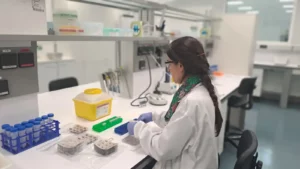
Outsourcing is a high-stakes scientific decision. A poorly executed study can result in the loss of millions of dollars in venture capital or the rejection of a regulatory filing.
When evaluating contract research organization services, the following questions are essential:
- Does the CRO possess demonstrated experience with your specific molecule type?
- What is their history of successful audits?
- Is their internal Quality Management System (QMS) rigorous enough?
- Do they prioritize transparent communication and scientific documentation standards?
- Do they have the ability to support method lifecycle evolution?
Outsourcing analytical development, more than a cost-saving mechanism, has become a strategic lever that shapes data quality, regulatory confidence, and development speed. When aligned correctly, analytical CROs contribute directly to more informed decisions and more resilient development programs.
At AMSbiopharma, we approach analytical work with this long-term perspective in mind. Our team is especially focused on high-precision UPLC-MS/MS method development, stability studies, and impurity profiling designed to accelerate your timeline while maintaining the highest standards of data integrity.
By combining this deep analytical expertisewith regulatory awareness, we support biotech and pharma teams in generating reliable data that stand up to scrutiny and accelerate progress across development stages.
If you would like to choose us as your analytical CRO, contact our team.
References
Altahir Ali A, Cao M, Allen J, Liu Q, Ling Y, Cheng L. Investigation of the drivers of logistics outsourcing in the United Kingdom’s pharmaceutical manufacturing industry. Multimodal Transp. 2023 Mar;2(1):100064. doi: 10.1016/j.multra.2022.100064
DeCorte BL. Evolving Outsourcing Landscape in Pharma R&D: Different Collaborative Models and Factors To Consider When Choosing a Contract Research Organization. J Med Chem. 2020 Oct 22;63(20):11362-11367. doi: 10.1021/acs.jmedchem.0c00176
International Council for Harmonisation (ICH). ICH Q2(R1) Validation of Analytical Procedures: Text and Methodology – Scientific guideline [Internet]. Ginebra: ICH; 1996 Nov [cited 2026 Ene 20]. Available from: https://database.ich.org/sites/default/files/Q2%28R1%29%20Guideline.pdf
