

The transition from discovery to clinical evaluation represents one of the most critical inflection points in the drug development process. Central to this journey is the Chemistry, Manufacturing and Controls (CMC) framework, which ensures that every dose of an investigational product is safe, effective, and consistent in quality. As a candidate moves through the drug development stages, the CMC strategy must evolve from initial characterization to robust, validated manufacturing processes. Navigating this transition requires a deep integration of analytical expertise and regulatory foresight to meet the expectations of agencies such as the US Food and Drug Administration (FDA). Establishing an analytical data package for an IND that is scientifically sound and compliant is the foundation for clinical success.
CMC in the drug development process: scope, responsibilities, and regulatory framework
Chemistry, Manufacturing, and Controls (CMC) is the body of information that defines the physical, chemical, and biological characteristics of the drug substance and drug product. CMC spans multiple responsibilities across the drug development process, including:
- Characterization of the drug substance and drug product
- Development and control of manufacturing processes
- Definition of critical quality attributes (CQAs)
- Establishment of analytical methods and specifications
- Stability assessment and storage conditions
While the regulatory CMC strategy focuses on the specific data and control parameters of the product, it must operate within the broader scope of Good Manufacturing Practice (GMP). In essence, CMC defines what the product is and how it is controlled, whereas GMP refers to the rigorous systems and facilities that ensure these parameters are consistently met during production.
The compliance with GMP guidelines is a mandatory regulatory CMC strategy at all drug development stages to protect participant safety. However, the framework allows for a risk-based approach. While the core principles of quality are constant, the specific regulations (such as 21 CFR Part 211) may offer more flexibility during Phase 1 than in later commercial stages. This regulatory environment requires a strict organizational separation between manufacturing units and a dedicated Quality Unit. Under this current framework, the applicant (rather than a third-party contractor) is ultimately responsible for the safety of subjects, ensuring that every batch meets the predefined analytical data package for IND.

Building the CMC section of the IND: Module 3 of the Common Technical Document (CTD) requirements and analytical data expectations
When preparing the CMC documentation for an IND submission, the technical information must be organized according to the International Council for Harmonisation (ICH) electronic CTD (eCTD) structure. This harmonized format ensures that applications are structured consistently for regulatory authorities across different regions. The dossier is divided into five specific IND Modules:
-
- Administrative Information and Prescribing Information
- Common Technical Document Summaries
- Quality
- Nonclinical Study Reports
- Clinical Study Reports
The quality component of a drug development IND submission is primarily contained within Module 3 of the CTD, andkey elements include:
-
- Drug substance information (3.2.S): structure, manufacturing process, characterization, impurity profile, analytical methods, and stability.
- Drug product information (3.2.P): formulation development, manufacturing controls, specifications, and container-closure systems.
- Validation and analytical procedures supporting product control.
- Stability data supporting proposed storage conditions and shelf life.
For the analytical data package for IND to be successful, it must be presented in a structured format where the granularity of documents allows for clear review and easy lifecycle management. Partnering with a laboratory that understands these regulatory requirements is essential for a seamless regulatory progression.
Analytical development across drug development stages: from preclinical to clinical manufacturing
Analytical development evolves alongside manufacturing maturity. During preclinical studies in drug development, analytical methods primarily aim to confirm identity and basic purity while supporting early toxicology batches. As programs advance, analytical expectations expand to ensure reproducibility and comparability across manufacturing scales.

Across the drug development stages, analytical priorities typically shift as follows:
- Early development: characterization assays and exploratory impurity profiling.
- IND-enabling phase: establishment of preliminary specifications and stability-indicating methods.
- Clinical manufacturing: method qualification, trending analysis, and batch comparability.
- Late clinical stages: validated methods aligned with commercial quality systems.
This progression ensures that the analytical data package for IND is built on a “stage-appropriate” basis. Early on, the emphasis is on safety and manufacturing controls, while later stages focus on demonstrating consistency and proving that any manufacturing changes do not impact the product’s identity or activity.
Industry experience has shown that parallel development of clinical and CMC activities can accelerate timelines when supported by evidence- and risk-based analytical strategies. Accelerated programs increasingly rely on prior knowledge, platform technologies, and targeted analytical characterization to maintain quality assurance while reducing development delays.
Risk-based CMC strategies: impurity control, stability programs, and method validation
The objectives of CMC considerations during drug development are, at their core, to ensure patient safety by controlling Critical Quality Attributes (CQAs) while enabling efficient regulatory progression. A robust regulatory CMC strategy leverages prior and platform knowledge to streamline development, especially in pandemic or “breakthrough” scenarios.
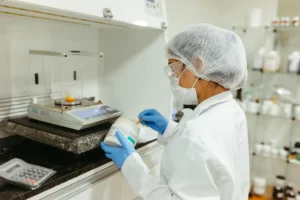
Key analytical components of risk-based CMC strategies include:
- Impurity identification and qualification aligned with toxicological risk
- Stability programs designed to understand degradation pathways
- Phase-appropriate analytical validation
- Comparability assessments following manufacturing changes
Experience from accelerated development programs demonstrates that early definition of CQAs and analytical control strategies significantly reduces regulatory friction later in development.
Achieving IND readiness requires integrating analytical science, manufacturing knowledge, and regulatory expectations into a coherent development strategy. Organizations that establish robust analytical frameworks early are better positioned to manage manufacturing changes, support clinical expansion, and avoid delays during regulatory review.
At AMSbiopharma, we combine advanced analytical capabilities with strong knowledge of CMC regulatory requirements to generate high-quality analytical data and help sponsors strengthen the scientific foundation of their development programs as they prepare for IND submissions and subsequent clinical progression.
For organizations interested in learning more about how these analytical activities can support CMC development strategies, contact us.
We will be pleased to provide further information and guidance.
References
International Council for Harmonisation (ICH). The Common Technical Document [Internet]. Geneva: ICH [cited 2026 Feb 23]. Available from: https://www.ich.org/page/ctd
Popkin ME, Goese M, Wilkinson D, Finnie S, Flanagan T, Campa C, Clinch A, Teasdale A, Lennard A, Cook G, Mohan G, Osborne MD. Chemistry Manufacturing and Controls Development, Industry Reflections on Manufacture, and Supply of Pandemic Therapies and Vaccines. AAPS J. 2022 Sep 27;24(6):101. doi: 10.1208/s12248-022-00751-9
U.S. Food and Drug Administration (FDA). Chemistry, Manufacturing, and Control (CMC) Information for Human Gene Therapy Investigational New Drug Applications (INDs): Guidance for Industry [Internet]. Silver Spring: FDA; 2020 Jan [cited 2026 Feb 23]. Available from: https://www.fda.gov/regulatory-information/search-fda-guidance-documents/chemistry-manufacturing-and-control-cmc-information-human-gene-therapy-investigational-new-drug
U.S. Food and Drug Administration. Guidance for Industry: Q8(R2) Pharmaceutical Development. Silver Spring (MD): FDA; 2009 [cited 2026 Feb 23]. Available from: https://www.fda.gov/media/70975/download