
Regulated Impurities
Specialised analytical services for the characterization of regulated impurities, risk assessment, and regulatory compliance.
Impurity control is one of the most demanding and highly regulated aspects of pharmaceutical quality assurance. Regulatory authorities have progressively strengthened their requirements through evolving guidance on nitrosamine impurities, extractables and leachables (E&L), and process-related impurities, introducing increasingly stringent analytical and compliance expectations.
For Quality Control professionals, failure to adequately control impurities can have serious consequences, ranging from batch rejection and regulatory enforcement actions to patient safety risks and product recalls. A robust, validated analytical approach is therefore not only a regulatory requirement but also a fundamental component of patient safety and product quality.
AMSbiopharma provides specialised analytical services for the major categories of regulated impurities, employing highly sensitive and selective validated methods capable of detecting and quantifying trace-level impurities in drug substances, drug products, and contact materials.
Discover
Our catalog of services include
Nitrosamine Impurity Testing (LC-MS/MS, HS-GC-MS)
Nitrosamine impurities have become one of the most significant regulatory compliance challenges facing the pharmaceutical industry following the detection of N-nitrosodimethylamine (NDMA) and related nitrosamines in multiple medicinal products at concentrations exceeding the acceptable intake (AI) limits established by the EMA and FDA.
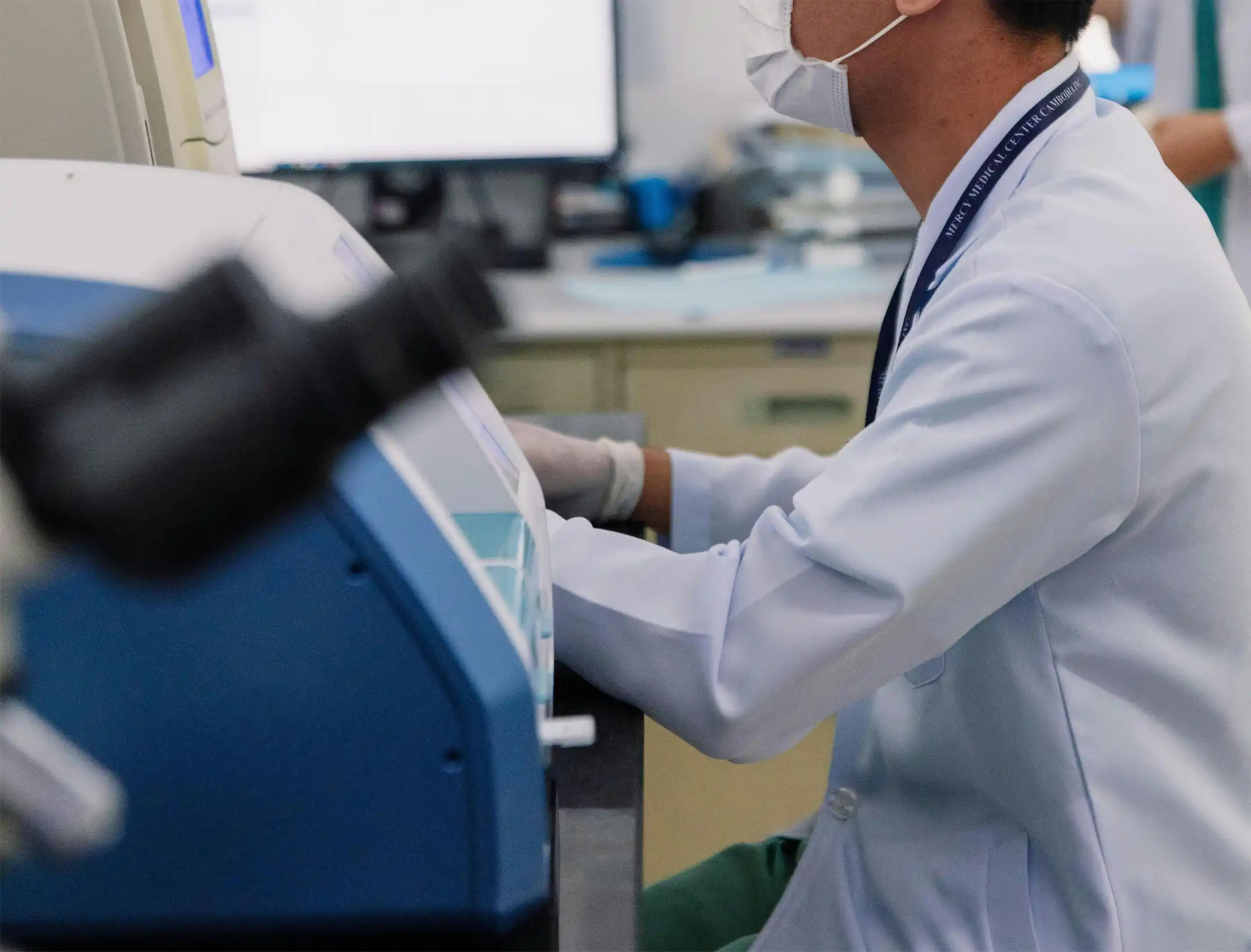
AMSbiopharma provides validated analytical services for the detection and quantification of nitrosamine impurities in drug substances, drug products, raw materials, and intermediates, using highly sensitive LC-MS/MS and HS-GC-MS methods capable of detecting nitrosamines at parts-per-billion (ppb) levels, well below the applicable acceptable intake (AI) limits.
Methods are developed and validated in accordance with current EMA and FDA guidance on nitrosamine impurities, with comprehensive validation packages available to support regulatory submissions.
Key analytical capabilities
- Validated LC-MS/MS and HS-GC-MS methods for nitrosamine detection below the applicable AI limits
- Coverage of NDMA, NDEA, NMBA, NIPEA, NDIPA, and other nitrosamine impurities
- Applicable to drug substances, drug products, raw materials, and intermediates
- Method development and validation in accordance with current EMA and FDA guidance
- Analytical support for risk assessments, confirmatory testing, and routine monitoring
- Submission-ready documentation for EMA and FDA regulatory filings
Extractables and Leachables (E&L)
Extractables and leachables (E&L) represent a critical safety consideration for pharmaceutical products in contact with primary packaging components, container closure systems, drug delivery devices, and manufacturing process contact materials. Leachable compounds migrating from these materials into the drug product may pose potential risks to patient safety and product quality.
AMSbiopharma provides comprehensive Extractables and Leachables (E&L) analytical services aligned with ICH Q3E, including extractables studies to characterise the extractable profile of packaging and process contact materials, leachables studies performed on drug products under appropriate storage conditions, and the preparation of Analytical Evaluation Reports (AERs) to support regulatory submissions.
Analytical studies are performed using HPLC-UV, LC-MS/MS, and GC-MS platforms to ensure broad chemical coverage, applying risk-based approaches that prioritise compounds of greatest toxicological and regulatory relevance.
Key analytical capabilities
- Extractables studies for packaging materials, container closure systems, and manufacturing process contact materials
- Leachables studies in drug products under defined storage conditions
- HPLC-UV, LC-MS/MS, and GC-MS analytical platforms providing broad chemical coverage
- Analytical Evaluation Reports (AERs) prepared in accordance with ICH Q3E
Drug Substance Impurity Testing: Process-Related Impurities
Process-related impurities arising from starting materials, reagents, catalysts, solvents, and manufacturing processes must be identified, characterised, and controlled within established limits. In accordance with ICH Q3A(R2) and ICH Q11, manufacturers are required to demonstrate adequate control of these impurities throughout the product lifecycle.
AMSbiopharma provides validated analytical services for the detection, identification, and quantification of process-related impurities in drug substances and drug products, using HPLC, LC-MS, and GC-MS methods selected according to the physicochemical properties of the target impurities.
Key analytical capabilities
- Detection and identification of process-related impurities using HPLC, LC-MS, and GC-MS
- Quantification at or below the reporting thresholds defined in ICH Q3A(R2)
- Applicable to drug substances, intermediates, and drug products
- Analytical support for impurity limit justification and regulatory submissions
- Method development and validation in accordance with ICH Q3A(R2) and ICH Q2(R2)
- Routine quality control testing with comprehensive documentation and full traceability
Drug Substance Impurity Testing: Unknown Impurity Identification (HPLC/UHPLC, LC-MS, GC-MS) / NON GMP
The structural identification of unknown drug impurities is a regulatory requirement under ICH Q3A(R2) and ICH Q3B(R2) whenever an impurity is present at or above the applicable identification threshold. Reliable structural elucidation requires the application of multiple orthogonal analytical techniques to achieve a high level of confidence in impurity identification.
AMSbiopharma provides comprehensive unknown impurity identification services using HPLC/UHPLC, high-resolution LC-MS, tandem mass spectrometry (MS/MS), and GC-MS to deliver confident structural elucidation of unknown peaks detected in drug substances and drug products.
Key analytical capabilities
- Structural elucidation using HPLC/UHPLC, high-resolution LC-MS, and GC-MS
- MS/MS fragmentation analysis for confident structural confirmation
- Applicable to impurities in drug substances and drug products
- Identification of degradation products, synthetic impurities, and process-related impurities
- Studies performed in accordance with ICH Q3A(R2) and ICH Q3B(R2), with submission-ready reports
Drug Substance Impurity Testing: Impurity Quantification (HPLC/UHPLC, LC-MS, GC-MS)
Accurate and reproducible quantification of drug-related impurities—including degradation products, synthetic impurities, and process-related impurities—is a mandatory analytical requirement throughout pharmaceutical development and commercial manufacturing.
AMSbiopharma provides validated analytical services for impurity quantification using HPLC/UHPLC, LC-MS, and GC-MS, with methods developed and validated in accordance with ICH Q3A(R2), ICH Q3B(R2), and ICH Q2(R2). Our methods provide the sensitivity required to detect and quantify impurities at or below the applicable reporting and qualification thresholds.
Key analytical capabilities
- Validated HPLC/UHPLC, LC-MS, and GC-MS methods for impurity quantification
- Detection and quantification at or below the reporting and qualification thresholds defined in ICH Q3A(R2) and ICH Q3B(R2)
- Applicable to drug substances and drug products throughout all stages of development
- Method development and validation in accordance with ICH Q3A(R2), ICH Q3B(R2), and ICH Q2(R2)
- Analytical support for impurity profiling, pharmaceutical development, and regulatory submissions
Contract Purification Services
Access to highly purified compounds is a critical enabling requirement across the pharmaceutical development pipeline. Whether the goal is the structural characterization of an unknown drug impurity by NMR spectroscopy, the preparation of toxicological qualification materials, the development of validated quantitative reference standards, or the isolation of synthetic intermediates for downstream analytical or formulation studies, the availability of purified materials at defined purity levels and in sufficient quantities is frequently a bottleneck that limits programme progress.
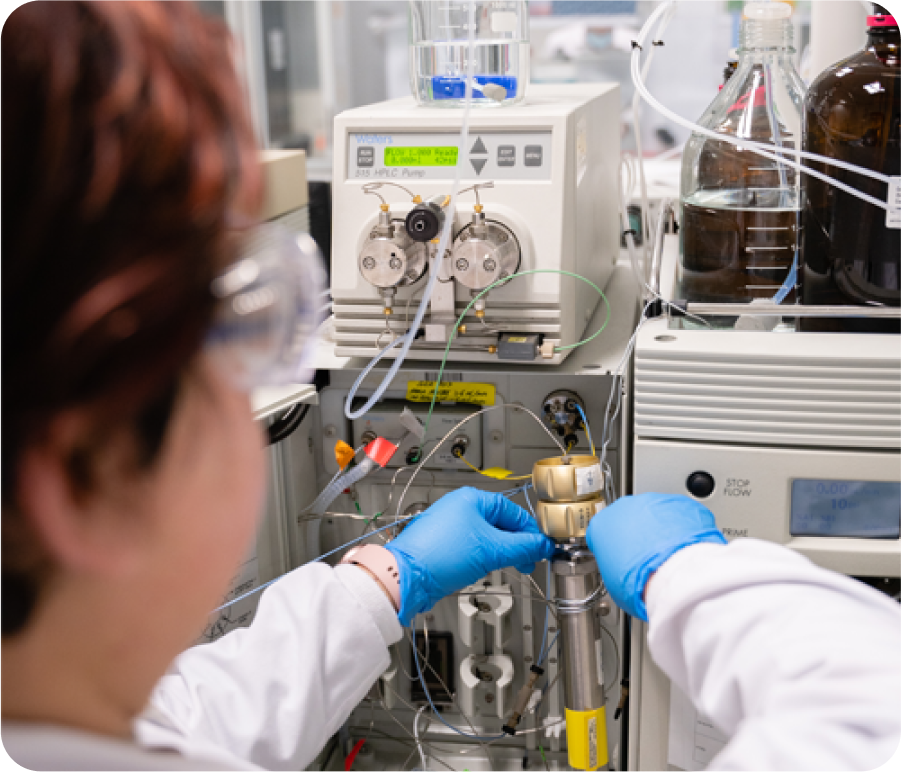
AMSbiopharma provides tailored contract purification services using advanced preparative HPLC platforms, applying high-resolution chromatographic separation to isolate and purify target compounds from complex mixtures with the precision and reproducibility required for pharmaceutical applications. Our team has extensive experience in the purification of complex mixtures across diverse compound classes, including APIs, drug impurities, degradation products, synthetic intermediates and target organic compounds from chemical reactions.
The purification process begins with a feasibility and method development phase, during which the optimal chromatographic conditions — stationary phase, mobile phase, gradient profile and loading strategy — are established using analytical-scale scouting runs. The validated preparative method is then scaled up to deliver the required quantity of purified material. All purified fractions are analytically characterised by purity assessment, identity confirmation and quantification before delivery, with a full analysis report or Certificate of Analysis (CoA) provided as standard.
Structural characterization of purified compounds or isolated impurities is supported through access to a comprehensive suite of analytical platforms: NMR spectroscopy (1H, 13C, DEPT, COSY, HMBC, HSQC and other experiments), UPLC–MS/MS and HPLC-UV, enabling definitive structure elucidation for unknown impurities and full characterization of purified drug-related substances.
Key analytical capabilities:
- Preparative and semi-preparative HPLC purification for complex pharmaceutical mixtures
- Isolation and purification of APIs, drug impurities, degradation products and synthetic intermediates
- Purification of target organic compounds from chemical reactions
- High-purity output (>90%) with full analytical characterization of purified fractions
- NMR spectroscopy support (1H, 13C, DEPT, COSY, HMBC, HSQC) for structural elucidation of purified compounds and unknown impurities
- UPLC–MS/MS and HPLC-UV analytical confirmation of identity and purity
- Delivery with full analysis report or Certificate of Analysis (CoA)
- Applicable to milligram to multi-gram scale isolation requirements
- Support for NMR structural characterization, toxicological qualification and reference standard development
- ICH Q3A/ICH Q3B compliant impurity qualification programme support
Service workflow:
- On-demand engagement. Contact our team with your purification requirements. Following order confirmation and execution of confidentiality agreements, our scientific team will review the project scope and objectives.
- Feasibility assessment and method development. Our team evaluates and presents the technical options available for the project, including chromatographic strategy, scale and expected purity outcomes. Concept testing may be proposed where appropriate. A project timeline and quotation are submitted for client acceptance.
- Purification execution and client communication. Our dedicated team conducts the purification programme under controlled analytical conditions. Regular communication with the client is maintained throughout the process to ensure alignment with project objectives and timelines.
- Delivery and reporting. On completion of the purification, purified materials are shipped to the client together with a full analysis report or CoA documenting purity, identity and quantity of the delivered fractions.