
Small Molecule
Analytical services for the development and quality control of small molecule drugs, from candidate to commercialisation.
Small molecule chemistry remains the backbone of global pharmaceutical development. Despite the accelerated growth of biological modalities, small molecule drugs — which account for the large majority of medicines currently approved — continue to dominate the research and development portfolios of the pharmaceutical industry, biotechnology and academia. Their well-defined chemical synthesis, scalable manufacturing and structural diversity make them the foundation of a broad range of therapeutic programmes, from cardiovascular and oncological diseases to neurological disorders and infectious diseases.
The development of a small molecule drug requires specialised analytical support at every stage of the product lifecycle. In the R&D phase, bioanalysis, DMPK and biomarker services provide the exposure, metabolism and biological activity data that guide candidate selection, compound optimisation and decision-making in preclinical and clinical studies. In the quality control and CMC development domain, rigorous characterisation and control of the drug substance and the pharmaceutical product are non-negotiable requirements to ensure patient safety and achieve regulatory approval.
The analytical requirements of small molecule drugs are governed by a well-established regulatory framework encompassing ICH guidelines on impurities (ICH Q3A, ICH Q3B, ICH Q3C), stability (ICH Q1), method validation (ICH Q2(R2)) and bioanalysis (ICH M10), as well as the pharmacopoeial requirements of the Ph. Eur. and the USP. AMSbiopharma provides validated analytical services aligned with all of these regulatory frameworks, supporting small molecule programmes from early development stages through to quality control and commercial batch release.
From a quality framework perspective, services for small molecules span both regulated environments aligned with the principles of Good Laboratory Practice (GLP) — for preclinical studies and clinical bioanalysis — and Good Manufacturing Practice (GMP) environments — for CMC, quality control and batch release services — as well as non-regulated services for exploratory and research applications. To learn about the specific regulatory framework applicable to your project, we invite you to contact our team.
What are small molecule drugs?
Small molecule drugs are low molecular weight compounds — generally below 900 daltons — synthesised through defined chemical routes. This category encompasses an extraordinary structural diversity: from the simplest compounds to molecules of considerable synthetic complexity, including classically synthesised oral drugs, small synthetic peptides and small molecules produced by total chemical synthesis.
Their low molecular weight enables them, in many cases, to cross cell membranes, reach intracellular targets and even penetrate the blood-brain barrier, offering therapeutic advantages that biological modalities frequently cannot provide. Their production by chemical synthesis also offers advantages in terms of scalability, manufacturing cost and physicochemical stability, making them particularly attractive for the development of generic medicines and globally accessible, low-cost treatments.
Therapeutic application areas
Small molecule drugs are present across virtually all therapeutic areas. They underpin the most widely used treatments in oncology — including kinase inhibitors and alkylating agents — as well as in cardiology, neurology, infectious diseases and metabolic disorders. Growing interest in targeted therapy and precision medicine has further driven the development of new generations of highly specific small molecules, including covalent inhibitors, protein degraders (PROTACs) and allosteric activators.
Analytical challenges in small molecule development
The analytical development of small molecule drugs spans challenges ranging from the detection and quantification of process- and synthesis-related impurities at trace levels, to drug and metabolite quantification in complex biological matrices for DMPK and clinical bioanalysis studies, through to the rigorous control of related substances, residual solvents, nitrosamine impurities and extractables and leachables during quality control and batch release stages.
The need for highly sensitive, specific and reproducible analytical methods — validated in accordance with international regulatory standards — is a constant throughout the entire development lifecycle, from the first preclinical studies through to advanced clinical trials and commercial manufacturing.
Discover
Our catalog of services include
Pharmacokinetic (PK/PD) Analysis / NON GLP
Accurate quantification of drug concentrations in biological matrices is the foundation of every pharmacokinetic programme. Our PK bioanalytical services support pharmacokinetic and preclinical toxicokinetic studies, providing the quantitative data required to characterise drug exposure throughout the development process.
We develop and validate bioanalytical methods for a wide range of biological matrices, including plasma, serum, whole blood, urine, cerebrospinal fluid (CSF), tissue homogenates, and dried blood spots (DBS). Full method development and validation are performed in accordance with ICH M10, covering specificity, selectivity, sensitivity, linearity, accuracy, precision, matrix effects, stability, and dilution integrity.
PK/PD data are delivered in formats compatible with leading pharmacokinetic and pharmacometric modelling software, enabling seamless integration into the sponsor’s development workflows. All studies are conducted under controlled documentation systems aligned with applicable regulatory requirements.
Key analytical capabilities
- Full ICH M10-compliant bioanalytical method development and validation for regulated studies
- Bioanalysis of plasma, serum, urine, CSF, tissue homogenates, and alternative biological matrices
- PK/PD data support for dose selection, exposure assessment, and regulatory submissions
- Applicable to small molecules, therapeutic peptides, biologics, oligonucleotides, and gene therapy vectors
Stability Study Support (HPLC-UV, HPLC-MS/MS, GC-MS/MS)
Stability studies provide the analytical data required to establish shelf life, define storage conditions, and support regulatory submissions. A well-designed stability programme supported by validated stability-indicating analytical methods is a regulatory requirement under ICH Q1 for all drug substances and drug products.
AMSbiopharma supports ICH Q1-compliant stability programmes with validated stability-indicating methods for the determination of assay, degradation products, related substances, and other critical quality attributes. Our team manages sample receipt, analytical testing, and data management throughout the study. Analytical testing is performed using HPLC-UV, HPLC-MS/MS, and GC-MS/MS, as appropriate for the product and analytical requirements.
Key analytical capabilities
- Design, execution, and analytical support for ICH Q1-compliant stability studies
- Validated stability-indicating methods using HPLC-UV, HPLC-MS/MS, and GC-MS/MS
- Data management compliant with 21 CFR Part 11 and EU GMP Annex 11
Inflammatory Biomarker Analysis / NON GLP
Inflammatory biomarkers are among the most widely evaluated endpoints in pharmaceutical development, providing critical mechanistic, pharmacodynamic, and safety data across immunology, oncology, autoimmune, metabolic, and central nervous system (CNS) diseases.
AMSbiopharma offers both targeted quantification of specific inflammatory biomarkers and broad inflammatory profiling approaches. Targeted assays provide the precision and validation status required for regulatory-grade pharmacodynamic data, while broad-panel approaches enable comprehensive inflammatory profiling to support biomarker discovery programmes.
Key analytical capabilities
- Targeted quantification of individual cytokines, chemokines, and acute-phase proteins
- Broad-panel inflammatory profiling for biomarker discovery
- Development and validation of analytical methods for plasma, serum, and tissue matrices
- Applicable to immunology, oncology, autoimmune diseases, and metabolic disorders
Vascular and Angiogenesis Biomarker Analysis / NON GLP
Vascular and angiogenesis biomarkers play a central role in oncology, cardiovascular diseases, and ophthalmology. Key mediators such as vascular endothelial growth factor (VEGF), platelet-derived growth factor (PDGF), and angiopoietins are widely used as pharmacodynamic endpoints in anti-angiogenic therapy programmes.
AMSbiopharma provides validated analytical services for the quantification of vascular proteins and angiogenic mediators in biological matrices, supporting mechanistic studies, target engagement assessment, and pharmacodynamic evaluations throughout drug development.
Key analytical capabilities
- Quantification of VEGF, PDGF, angiopoietins, and related vascular biomarkers
- Method development and validation for plasma, serum, tissue, and other biological matrices
- Analytical support for pharmacodynamic monitoring in anti-angiogenic therapy programmes
- Applicable to oncology, cardiovascular diseases, and ophthalmology
Systemic Disease Biomarker Analysis / NON GLP
Systemic disease biomarkers provide essential diagnostic, prognostic, and pharmacodynamic insights across a broad range of therapeutic areas.
AMSbiopharma provides validated analytical services for the quantification of proteins, enzymes, metabolites, and other disease-associated molecular targets in biological samples. Our methods generate high-quality data suitable for regulatory biomarker submissions and support companion diagnostic (CDx) development programmes.
Key analytical capabilities
- Quantification of disease-associated proteins, enzymes, and metabolites
- Applicable across multiple therapeutic areas and disease indications
- Development and validation of analytical methods for pharmacodynamic monitoring in clinical trials
- Data packages aligned with FDA and EMA biomarker guidance
Oncology Biomarkers / NON GLP
Oncology biomarkers are central to the design of modern clinical trials, enabling patient stratification based on predictive biomarker status, pharmacodynamic monitoring of target engagement, and the development of companion diagnostics (CDx).
AMSbiopharma provides bioanalytical services for the quantification of tumour-associated proteins, circulating biomarkers, pharmacodynamic endpoints, and response biomarkers in plasma, serum, tumour tissue, and liquid biopsy samples.
Key analytical capabilities
- Quantification of circulating tumour biomarkers and pharmacodynamic endpoints
- Validated analytical methods for plasma, serum, tumour tissue, and liquid biopsy samples
- Analysis of patient stratification biomarkers for oncology clinical trials
- Applicable to immuno-oncology, targeted therapies, and antibody-drug conjugate (ADC) development programmes
Appearance Testing (Colour, Clarity and Particulate Matter) / NON GMP
Appearance is a fundamental quality attribute of pharmaceutical products and a mandatory release test for all dosage forms. Deviations in colour, clarity, or particulate matter from predefined specifications may indicate product degradation, contamination, or manufacturing process failure.
AMSbiopharma performs validated appearance testing for colour, clarity, and particulate matter using calibrated visual and instrumental methods in accordance with applicable pharmacopoeial specifications and regulatory requirements.
Key analytical capabilities
- Visual and instrumental appearance testing in accordance with Ph. Eur. and USP
- Colour assessment against pharmacopoeial reference standards
- Clarity testing for solution-based pharmaceutical products
- Particulate matter testing, including sub-visible particle analysis
- Applicable to parenteral, oral liquid, and semi-solid dosage forms
- Supporting documentation for batch release and stability studies
Assay and Dosage Unit Uniformity Testing (UV/Vis, HPLC/UHPLC, GC, GC/MS, LC/MS) / NON GMP
Assay and dosage unit uniformity are fundamental quality control requirements for all pharmaceutical products, providing quantitative evidence that each batch contains the intended amount of drug substance, uniformly distributed throughout the dosage units.
AMSbiopharma employs validated analytical methods across a broad range of analytical platforms, including UV/Vis spectrophotometry, HPLC and UHPLC with multiple detection techniques, GC, GC/MS, and LC/MS, selecting the most appropriate technology for each product. All methods are developed and validated in accordance with the Ph. Eur., USP, and ICH Q2(R2) guidelines.
Key analytical capabilities
- Validated assay methods using UV/Vis, HPLC/UHPLC, GC, GC/MS, and LC/MS
- Content uniformity testing in accordance with Ph. Eur. 2.9.40 and USP <905>
- Applicable to solid, liquid, semi-solid, and parenteral dosage forms
- Method development and validation in accordance with Ph. Eur., USP, and ICH Q2(R2)
- Analytical support for method development, validation, and routine batch release testing
- Complete documentation to support regulatory submissions
Identification and Quantification of Related Substances (HPLC, GC/MS, LC/MS)
The control of related substances—including process-related impurities, synthetic impurities, and degradation products—is one of the most critical quality control activities in pharmaceutical manufacturing. Regulatory authorities require all drug substances and drug products to be tested down to established reporting thresholds, with any impurity present at or above the applicable identification or qualification thresholds being appropriately identified and qualified.
AMSbiopharma provides validated analytical services for the identification and quantification of related substances using HPLC, GC/MS, and LC/MS, selecting the most appropriate analytical platform based on the physicochemical properties of each compound. Analytical methods are developed and validated in accordance with ICH Q3A(R2), ICH Q3B(R2), and ICH Q2(R2).
Key analytical capabilities
- Validated HPLC, GC/MS, and LC/MS methods for the quantification of related substances
- Detection and quantification at or below the reporting thresholds defined in ICH Q3A(R2) and ICH Q3B(R2)
- Applicable to drug substances, intermediates, and drug products
- Impurity profiling in accordance with ICH Q3A(R2) and ICH Q3B(R2)
- Support for impurity limit justification and toxicological qualification
- Routine quality control testing with comprehensive supporting documentation
Physicochemical Testing (pH, Viscosity, Density, Polarimetry, Refractive Index, Osmolality) / NON GMP
Physical and physicochemical characterization provides critical quality attribute (CQA) data for pharmaceutical products. For liquid and semi-solid dosage forms, parameters such as pH, viscosity, and osmolality are critical determinants of product stability, while for parenteral products, they are essential to ensure physiological compatibility.
AMSbiopharma offers a comprehensive range of validated physicochemical testing services, covering the full spectrum of analytical parameters required for pharmaceutical development and quality control. All analyses are performed using calibrated and qualified instrumentation to ensure reliable, reproducible, and regulatory-compliant results.
Key analytical capabilities
- pH measurement across a wide range of pharmaceutical dosage forms
- Viscosity determination using calibrated instrumentation
- Density and relative density determination using validated methods
- Refractive index measurement for identity confirmation and concentration determination
- Osmolality determination by the freezing-point depression method for parenteral products
Residual Solvents and Volatile Organic Impurities (GC-MS)
Residual solvent testing is a mandatory pharmaceutical quality requirement under ICH Q3C(R9), which classifies solvents according to their toxicological risk and establishes permitted daily exposures (PDEs), reporting thresholds, and acceptance limits. Regulatory authorities require validated analytical methods with sufficient sensitivity to detect and quantify residual solvents below the specified limits.
AMSbiopharma provides validated headspace GC-MS methods for the quantification of ICH Q3C Class 1, Class 2, and Class 3 residual solvents, as well as volatile organic impurities, in drug substances, drug products, and excipients. Headspace gas chromatography coupled with mass spectrometry (HS-GC-MS) delivers the selectivity and sensitivity required for regulatory compliance and routine quality control.
Key analytical capabilities
- Validated headspace GC-MS methods for ICH Q3C Class 1, Class 2, and Class 3 residual solvents
- Detection and quantification at or below the limits specified in ICH Q3C(R9)
- Applicable to drug substances, drug products, and excipients
- Method development and validation in accordance with ICH Q3C(R9) and ICH Q2(R2)
- Analytical support for regulatory submissions and routine quality control testing
- Profiling of volatile organic impurities beyond those specifically addressed in ICH Q3C(R9)
Nitrosamine Impurity Testing (LC-MS/MS, HS-GC-MS)
Nitrosamine impurities have become one of the most significant regulatory compliance challenges facing the pharmaceutical industry following the detection of N-nitrosodimethylamine (NDMA) and related nitrosamines in multiple medicinal products at concentrations exceeding the acceptable intake (AI) limits established by the EMA and FDA.
AMSbiopharma provides validated analytical services for the detection and quantification of nitrosamine impurities in drug substances, drug products, raw materials, and intermediates, using highly sensitive LC-MS/MS and HS-GC-MS methods capable of detecting nitrosamines at parts-per-billion (ppb) levels, well below the applicable acceptable intake (AI) limits.
Methods are developed and validated in accordance with current EMA and FDA guidance on nitrosamine impurities, with comprehensive validation packages available to support regulatory submissions.
Key analytical capabilities
- Validated LC-MS/MS and HS-GC-MS methods for nitrosamine detection below the applicable AI limits
- Coverage of NDMA, NDEA, NMBA, NIPEA, NDIPA, and other nitrosamine impurities
- Applicable to drug substances, drug products, raw materials, and intermediates
- Method development and validation in accordance with current EMA and FDA guidance
- Analytical support for risk assessments, confirmatory testing, and routine monitoring
- Submission-ready documentation for EMA and FDA regulatory filings
Extractables and Leachables (E&L)
Extractables and leachables (E&L) represent a critical safety consideration for pharmaceutical products in contact with primary packaging components, container closure systems, drug delivery devices, and manufacturing process contact materials. Leachable compounds migrating from these materials into the drug product may pose potential risks to patient safety and product quality.
AMSbiopharma provides comprehensive Extractables and Leachables (E&L) analytical services aligned with ICH Q3E, including extractables studies to characterise the extractable profile of packaging and process contact materials, leachables studies performed on drug products under appropriate storage conditions, and the preparation of Analytical Evaluation Reports (AERs) to support regulatory submissions.
Analytical studies are performed using HPLC-UV, LC-MS/MS, and GC-MS platforms to ensure broad chemical coverage, applying risk-based approaches that prioritise compounds of greatest toxicological and regulatory relevance.
Key analytical capabilities
- Extractables studies for packaging materials, container closure systems, and manufacturing process contact materials
- Leachables studies in drug products under defined storage conditions
- HPLC-UV, LC-MS/MS, and GC-MS analytical platforms providing broad chemical coverage
- Analytical Evaluation Reports (AERs) prepared in accordance with ICH Q3E
Antibody–Drug Conjugate (ADC) Characterization
Antibody–drug conjugates (ADCs) combine the target specificity of monoclonal antibodies with the cytotoxic potency of small-molecule payloads, creating therapeutics of exceptional structural and analytical complexity. The quality of an ADC is determined by attributes such as the drug-to-antibody ratio (DAR), conjugation site distribution, the proportion of unconjugated antibody, free payload, and the presence of aggregates.
AMSbiopharma provides comprehensive ADC characterization services addressing both the antibody and payload components. Our analytical capabilities include DAR determination, conjugation site mapping by LC-MS/MS peptide mapping, free payload quantification, aggregation profiling, and stability assessment.
Key analytical capabilities
- Drug-to-antibody ratio (DAR) determination using multiple analytical approaches
- Conjugation site analysis and mapping by LC-MS/MS peptide mapping
- Integrated characterization of both antibody and payload quality attributes
Drug Substance Impurity Testing: Process-Related Impurities
Process-related impurities arising from starting materials, reagents, catalysts, solvents, and manufacturing processes must be identified, characterised, and controlled within established limits. In accordance with ICH Q3A(R2) and ICH Q11, manufacturers are required to demonstrate adequate control of these impurities throughout the product lifecycle.
AMSbiopharma provides validated analytical services for the detection, identification, and quantification of process-related impurities in drug substances and drug products, using HPLC, LC-MS, and GC-MS methods selected according to the physicochemical properties of the target impurities.
Key analytical capabilities
- Detection and identification of process-related impurities using HPLC, LC-MS, and GC-MS
- Quantification at or below the reporting thresholds defined in ICH Q3A(R2)
- Applicable to drug substances, intermediates, and drug products
- Analytical support for impurity limit justification and regulatory submissions
- Method development and validation in accordance with ICH Q3A(R2) and ICH Q2(R2)
- Routine quality control testing with comprehensive documentation and full traceability
Drug Substance Impurity Testing: Unknown Impurity Identification (HPLC/UHPLC, LC-MS, GC-MS) / NON GMP
The structural identification of unknown drug impurities is a regulatory requirement under ICH Q3A(R2) and ICH Q3B(R2) whenever an impurity is present at or above the applicable identification threshold. Reliable structural elucidation requires the application of multiple orthogonal analytical techniques to achieve a high level of confidence in impurity identification.
AMSbiopharma provides comprehensive unknown impurity identification services using HPLC/UHPLC, high-resolution LC-MS, tandem mass spectrometry (MS/MS), and GC-MS to deliver confident structural elucidation of unknown peaks detected in drug substances and drug products.
Key analytical capabilities
- Structural elucidation using HPLC/UHPLC, high-resolution LC-MS, and GC-MS
- MS/MS fragmentation analysis for confident structural confirmation
- Applicable to impurities in drug substances and drug products
- Identification of degradation products, synthetic impurities, and process-related impurities
- Studies performed in accordance with ICH Q3A(R2) and ICH Q3B(R2), with submission-ready reports
Drug Substance Impurity Testing: Impurity Quantification (HPLC/UHPLC, LC-MS, GC-MS)
Accurate and reproducible quantification of drug-related impurities—including degradation products, synthetic impurities, and process-related impurities—is a mandatory analytical requirement throughout pharmaceutical development and commercial manufacturing.
AMSbiopharma provides validated analytical services for impurity quantification using HPLC/UHPLC, LC-MS, and GC-MS, with methods developed and validated in accordance with ICH Q3A(R2), ICH Q3B(R2), and ICH Q2(R2). Our methods provide the sensitivity required to detect and quantify impurities at or below the applicable reporting and qualification thresholds.
Key analytical capabilities
- Validated HPLC/UHPLC, LC-MS, and GC-MS methods for impurity quantification
- Detection and quantification at or below the reporting and qualification thresholds defined in ICH Q3A(R2) and ICH Q3B(R2)
- Applicable to drug substances and drug products throughout all stages of development
- Method development and validation in accordance with ICH Q3A(R2), ICH Q3B(R2), and ICH Q2(R2)
- Analytical support for impurity profiling, pharmaceutical development, and regulatory submissions
DMPK – Drug Metabolism and Pharmacokinetic Analysis
Drug Metabolism and Pharmacokinetics (DMPK) studies provide a mechanistic understanding of how a compound is absorbed, distributed, metabolised, and excreted (ADME). This information is essential for predicting in vivo behaviour, optimising compound properties, and assessing the potential for drug–drug interactions (DDIs).
AMSbiopharma provides comprehensive DMPK bioanalytical support using both preclinical species and human-derived matrices. Our services include metabolic stability studies in hepatic matrices, metabolite profiling and identification by high-resolution mass spectrometry (HRMS), plasma protein binding, and blood-to-plasma partitioning. Metabolite identification studies are performed to standards suitable for regulatory submissions.
Our team delivers early-stage ADME screening to support lead selection and optimisation, as well as comprehensive, regulatory-grade metabolite profiling studies to support clinical development programmes.
Key analytical capabilities
- Metabolic stability screening in liver microsomes, hepatocytes, and S9 fractions
- Metabolite profiling and structural identification by high-resolution mass spectrometry (HRMS)
- Plasma protein binding and blood-to-plasma ratio determination
- Support for reactive metabolite risk assessment and drug–drug interaction (DDI) studies
Amino Acid and Related Compound Analysis / NON GLP
Amino acid analysis provides essential compositional information for the identity confirmation and quality control of proteins, peptides, and amino acid-based pharmaceuticals. Amino acid composition serves as an identity test, a tool for protein content estimation, and a quantitative quality control assay for formulated products.
AMSbiopharma provides validated analytical services for the quantification of amino acids and related compounds in drug substances, drug products, and biological matrices, applying validated hydrolysis and derivatisation protocols followed by chromatographic separation and detection.
Key analytical capabilities
- Amino acid composition analysis for protein and peptide identity confirmation
- Quantification of all proteinogenic amino acids
- Applicable to drug substance characterization and quality control
- Support for protein content estimation by amino acid analysis
- Applicable to drug substances, drug products, and biological matrices
- Complete validation documentation for regulatory submissions
Biogenic Amine Biomarker Analysis / NON GLP
Biogenic amines—including serotonin, dopamine, norepinephrine, epinephrine, histamine, and their metabolites—are important pharmacodynamic and safety biomarkers in central nervous system (CNS), cardiovascular, and oncology drug development programmes.
AMSbiopharma provides validated analytical services for the quantification of biogenic amines in plasma, urine, cerebrospinal fluid (CSF), and tissue using highly sensitive LC-MS/MS methods with the selectivity required for pharmacodynamic and safety biomarker applications.
Key analytical capabilities
- Quantification of serotonin, dopamine, norepinephrine, epinephrine, and their metabolites
- Development and validation of LC-MS/MS methods for plasma, urine, CSF, and tissue
- Applicable to CNS, cardiovascular, and oncology drug development programmes
- Method development for the selective quantification of structurally related biogenic amines
Ceramide and Sphingosine Biomarker Analysis / NON GLP
Ceramides and sphingosines are bioactive lipid species with growing importance as biomarkers for cardiovascular risk stratification, metabolic diseases, and oncology.
AMSbiopharma provides validated LC-MS/MS analytical services for the targeted quantification of individual ceramide and sphingosine species in plasma, serum, and other biological matrices, delivering the specificity and sensitivity required for biomarker qualification and translational research.
Key analytical capabilities
- Targeted quantification of individual ceramide and sphingosine species
- Development and validation of highly sensitive and selective LC-MS/MS methods
- Data quality aligned with applicable regulatory guidelines
Cortisol Biomarker Analysis / NON GLP
Cortisol is a key biomarker in endocrinology, stress physiology, and hypothalamic–pituitary–adrenal (HPA) axis function, with broad applications in CNS, metabolic disease, oncology, and endocrine drug development.
AMSbiopharma provides validated analytical services for the quantification of cortisol in plasma, serum, urine, and saliva, using validated chromatographic methods with the sensitivity and specificity required to support both preclinical and clinical development programmes.
Key analytical capabilities
- Quantification of cortisol in plasma, serum, urine, and saliva
- Development and validation of analytical methods with the sensitivity required for circadian rhythm monitoring
- Applicable to CNS, endocrinology, and metabolic disease programmes
Sphingolipid Biomarker Analysis / NON GLP
Sphingolipids are bioactive lipid molecules with well-established roles in membrane structure, cell signalling, and inflammatory responses. The sphingolipidome has emerged as an important source of biomarkers for metabolic, neurological, and inflammatory diseases, as well as oncology.
AMSbiopharma provides LC-MS/MS-based analytical services for the targeted quantification and profiling of sphingolipid species in biological matrices, delivering the analytical selectivity required to accurately differentiate and quantify individual molecular species.
Key analytical capabilities
- Targeted quantification and profiling of sphingolipid species using LC-MS/MS
- Applicable to metabolic, neurological, and inflammatory diseases
- Development and validation of analytical methods for clinical biomarker studies
- Data quality and reproducibility aligned with regulatory expectations
Untargeted Metabolomics (Relative Quantification) / NON GMP
Untargeted metabolomics enables the simultaneous, unbiased profiling of hundreds of metabolites across multiple biochemical classes in a single analytical run, without prior selection of target analytes. This approach is particularly valuable during the discovery phase, where metabolic profiling data can reveal altered metabolic pathways and identify potential biomarker candidates for further investigation.
AMSbiopharma employs high-resolution mass spectrometry (HRMS) platforms operating in both positive and negative ionisation modes, combined with advanced data processing workflows for peak detection, alignment, normalisation, and metabolite annotation against reference databases. Statistical analyses are performed to identify significantly altered metabolites and metabolic pathways across study groups.
All analytical runs include a comprehensive set of quality control (QC) samples and reference standards to continuously monitor analytical performance and ensure the generation of reliable, high-quality data.
Key analytical capabilities
- HRMS-based metabolic profiling in positive and negative ionisation modes
- Simultaneous detection of hundreds of metabolites across multiple biochemical classes
- Database-driven metabolite annotation and metabolic pathway mapping
- Comprehensive quality control strategy to ensure data quality and analytical robustness
- Applicable to plasma, urine, and tissue samples
Targeted Quantitative Metabolomics / NON GMP
Targeted quantitative metabolomics provides accurate, validated quantification of defined metabolite panels, delivering the data quality required for clinical biomarker programmes, pharmacodynamic monitoring studies, and regulatory submissions.
AMSbiopharma offers targeted quantitative metabolomics services using validated LC-MS/MS methods for the simultaneous quantification of predefined metabolite panels. Method development and validation are performed in accordance with applicable regulatory guidelines, covering sensitivity, specificity, linearity, accuracy, precision, and stability.
Our metabolite panels cover the major metabolic pathways—including amino acid, lipid, energy, nucleotide, and one-carbon metabolism—with the flexibility to design custom panels tailored to specific programme requirements.
Key analytical capabilities
- Validated LC-MS/MS methods for the simultaneous quantification of multiple metabolites
- Custom metabolite panel development tailored to specific programme requirements
Microbial Enumeration Testing (TAMC, TYMC)
Microbial enumeration testing of non-sterile pharmaceutical products is a fundamental requirement for ensuring product quality and patient safety. Determination of the Total Aerobic Microbial Count (TAMC) and the Total Yeast and Mould Count (TYMC) provides the quantitative evidence required to demonstrate compliance with the microbiological acceptance criteria established in the applicable pharmacopoeial specifications, confirming that the microbial bioburden remains within acceptable limits throughout the product’s shelf life.
AMSbiopharma performs validated TAMC and TYMC testing in accordance with Ph. Eur. 2.6.12/2.6.13 and USP <61>/<62>, including the method suitability studies required for each product type and matrix. All testing is carried out under controlled laboratory conditions by qualified personnel following documented procedures aligned with Good Manufacturing Practice (GMP) principles.
Method validation includes assessment of method suitability for each product type, incorporating the recovery studies required by Ph. Eur. 2.6.12/2.6.13 and USP <61>/<62>. Test results are provided with comprehensive supporting documentation suitable for batch release and stability programmes.
Key analytical capabilities
- Total Aerobic Microbial Count (TAMC) in accordance with Ph. Eur. 2.6.12 and USP <61>
- Total Yeast and Mould Count (TYMC) in accordance with Ph. Eur. 2.6.13 and USP <62>
- Testing of active pharmaceutical ingredients (APIs), drug products, excipients, and raw materials
Water Testing
Microbiological testing of water is a critical component of the quality assurance system in pharmaceutical manufacturing facilities. The microbiological quality of water used during manufacturing—including Purified Water (PW), Water for Injection (WFI), and Highly Purified Water (HPW)—is a critical quality attribute that must be routinely monitored in accordance with the requirements of the Ph. Eur., the USP, and applicable GMP guidelines.
AMSbiopharma provides microbiological testing services for pharmaceutical water using methods compliant with applicable pharmacopoeial and regulatory requirements. Our services include microbial enumeration testing (TAMC/TYMC) and the detection of specified microorganisms, in accordance with the water quality specifications established by the Ph. Eur. and the USP for each pharmaceutical water grade.
Key analytical capabilities
- Microbiological testing of Purified Water (PW), Water for Injection (WFI), and Highly Purified Water (HPW)
- TAMC/TYMC determination and detection of specified microorganisms in pharmaceutical water in accordance with Ph. Eur. and USP requirements
Antimicrobial Preservative Effectiveness Testing (AET)
Antimicrobial preservatives are critical formulation components in many multidose pharmaceutical products, including ophthalmic, parenteral, oral, and topical preparations. Demonstrating preservative efficacy—its ability to prevent microbial proliferation and maintain the microbiological integrity of the product throughout its intended storage and in-use period—is a mandatory regulatory requirement that must be assessed using Antimicrobial Preservative Effectiveness Testing (AET) in accordance with applicable pharmacopoeial methods.
AMSbiopharma performs Antimicrobial Preservative Effectiveness Testing (AET) in compliance with Ph. Eur. 5.1.3 and USP <51>, using the pharmacopoeia-required challenge panel of bacteria, yeasts, and moulds, and applying the acceptance criteria established for each product category. All studies are conducted using certified reference strains under controlled laboratory conditions, with comprehensive documentation suitable for inclusion in regulatory submissions.
Key analytical capabilities
- Antimicrobial Preservative Effectiveness Testing (AET) in accordance with Ph. Eur. 5.1.3 and USP <51>
Quantification of Biological Indicators and Microorganisms Enumeration
The quantification of biological indicators and specific microorganisms is an essential component of a wide range of pharmaceutical microbiology applications, including sterilisation process qualification and validation, pre-sterilisation bioburden determination, and the monitoring of manufacturing processes where control of specific microorganisms is critical to product quality and patient safety.
AMSbiopharma provides biological indicator quantification and microorganism enumeration services using validated methods tailored to each specific application. Biological indicators are microorganisms with a defined and characterised resistance to the sterilisation process under evaluation—typically Geobacillus stearothermophilus spores for steam sterilisation and Bacillus atrophaeus spores for ethylene oxide sterilisation. Their quantification before and after the sterilisation process provides documented evidence of sterilisation process effectiveness.
Key analytical capabilities
- Pre-sterilisation bioburden determination in accordance with Ph. Eur. 2.6.12 and ISO 11737-1
- Enumeration of specific microorganisms in product and process samples
Bacterial Endotoxins Testing
Bacterial endotoxins are lipopolysaccharides (LPS) found in the outer membrane of Gram-negative bacteria. When introduced into the body through parenteral products, they can trigger severe pyrogenic reactions and, in extreme cases, septic shock. Consequently, bacterial endotoxin testing is a critical quality attribute for all parenteral pharmaceutical products and a mandatory requirement for batch release.
Key analytical capabilities
- Bacterial Endotoxins Testing (BET) using the Limulus Amebocyte Lysate (LAL) method in accordance with Ph. Eur. 2.6.14 and USP <85>
Contract Purification Services
Access to highly purified compounds is a critical enabling requirement across the pharmaceutical development pipeline. Whether the goal is the structural characterization of an unknown drug impurity by NMR spectroscopy, the preparation of toxicological qualification materials, the development of validated quantitative reference standards, or the isolation of synthetic intermediates for downstream analytical or formulation studies, the availability of purified materials at defined purity levels and in sufficient quantities is frequently a bottleneck that limits programme progress.
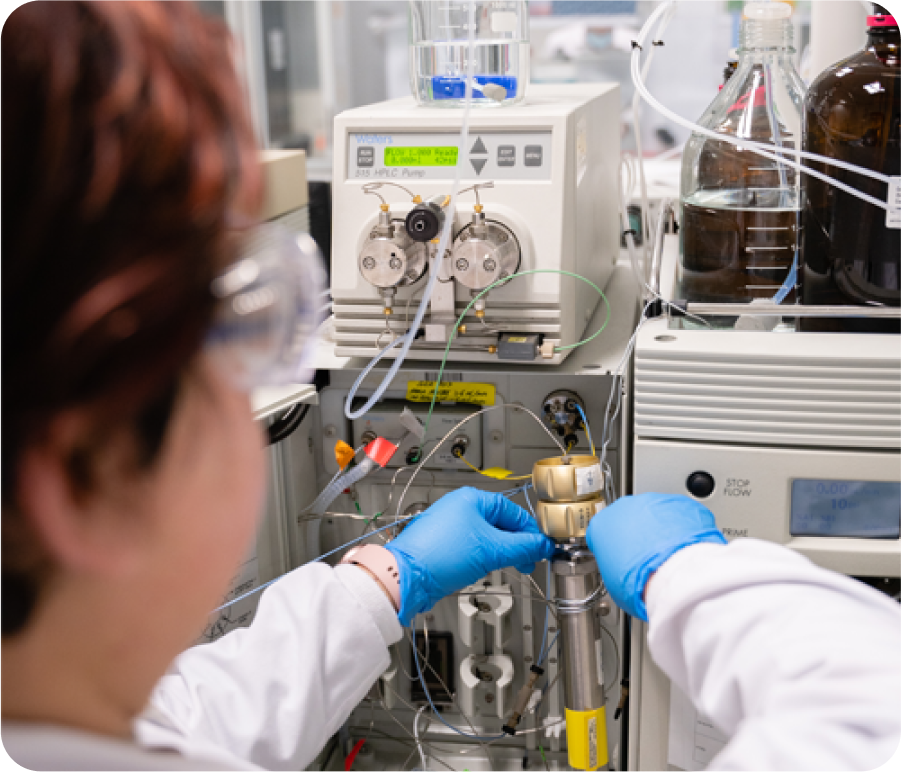
AMSbiopharma provides tailored contract purification services using advanced preparative HPLC platforms, applying high-resolution chromatographic separation to isolate and purify target compounds from complex mixtures with the precision and reproducibility required for pharmaceutical applications. Our team has extensive experience in the purification of complex mixtures across diverse compound classes, including APIs, drug impurities, degradation products, synthetic intermediates and target organic compounds from chemical reactions.
The purification process begins with a feasibility and method development phase, during which the optimal chromatographic conditions — stationary phase, mobile phase, gradient profile and loading strategy — are established using analytical-scale scouting runs. The validated preparative method is then scaled up to deliver the required quantity of purified material. All purified fractions are analytically characterised by purity assessment, identity confirmation and quantification before delivery, with a full analysis report or Certificate of Analysis (CoA) provided as standard.
Structural characterization of purified compounds or isolated impurities is supported through access to a comprehensive suite of analytical platforms: NMR spectroscopy (1H, 13C, DEPT, COSY, HMBC, HSQC and other experiments), UPLC–MS/MS and HPLC-UV, enabling definitive structure elucidation for unknown impurities and full characterization of purified drug-related substances.
Key analytical capabilities:
- Preparative and semi-preparative HPLC purification for complex pharmaceutical mixtures
- Isolation and purification of APIs, drug impurities, degradation products and synthetic intermediates
- Purification of target organic compounds from chemical reactions
- High-purity output (>90%) with full analytical characterization of purified fractions
- NMR spectroscopy support (1H, 13C, DEPT, COSY, HMBC, HSQC) for structural elucidation of purified compounds and unknown impurities
- UPLC–MS/MS and HPLC-UV analytical confirmation of identity and purity
- Delivery with full analysis report or Certificate of Analysis (CoA)
- Applicable to milligram to multi-gram scale isolation requirements
- Support for NMR structural characterization, toxicological qualification and reference standard development
- ICH Q3A/ICH Q3B compliant impurity qualification programme support
Service workflow:
- On-demand engagement. Contact our team with your purification requirements. Following order confirmation and execution of confidentiality agreements, our scientific team will review the project scope and objectives.
- Feasibility assessment and method development. Our team evaluates and presents the technical options available for the project, including chromatographic strategy, scale and expected purity outcomes. Concept testing may be proposed where appropriate. A project timeline and quotation are submitted for client acceptance.
- Purification execution and client communication. Our dedicated team conducts the purification programme under controlled analytical conditions. Regular communication with the client is maintained throughout the process to ensure alignment with project objectives and timelines.
- Delivery and reporting. On completion of the purification, purified materials are shipped to the client together with a full analysis report or CoA documenting purity, identity and quantity of the delivered fractions.
Analytical Method Development, Validation, and Transfer
Our method development services begin with a comprehensive understanding of the analytical challenge: the physicochemical properties of the analyte, matrix complexity, regulatory context, and performance requirements. Based on this foundation, we design analytical methods optimized for sensitivity, specificity, accuracy, and robustness.
Method validation is performed in accordance with applicable regulatory guidelines — ICH Q2(R2) for quantitative pharmaceutical methods and ICH M10 for regulated bioanalytical methods — covering all required validation parameters: specificity, linearity, range, accuracy, precision, detection and quantification limits, robustness, and stability. Complete validation reports are prepared in a regulatory-ready format.
Method transfer services ensure that validated methods perform consistently in receiving laboratories, through an interlaboratory comparability exercise demonstrating equivalent performance. Transfer documentation complies with applicable regulatory requirements.
Key analytical capabilities:
Method development for HPLC, UHPLC, GC, LC-MS/MS, HRMS, and other analytical platforms
Full validation in accordance with ICH Q2(R2), ICH M10, and applicable specific guidelines
Validation for small molecules, peptides, biologics, and oligonucleotides
Method transfer with interlaboratory comparability and regulatory documentation
Phase-appropriate validation strategies for early- and late-stage development programs